
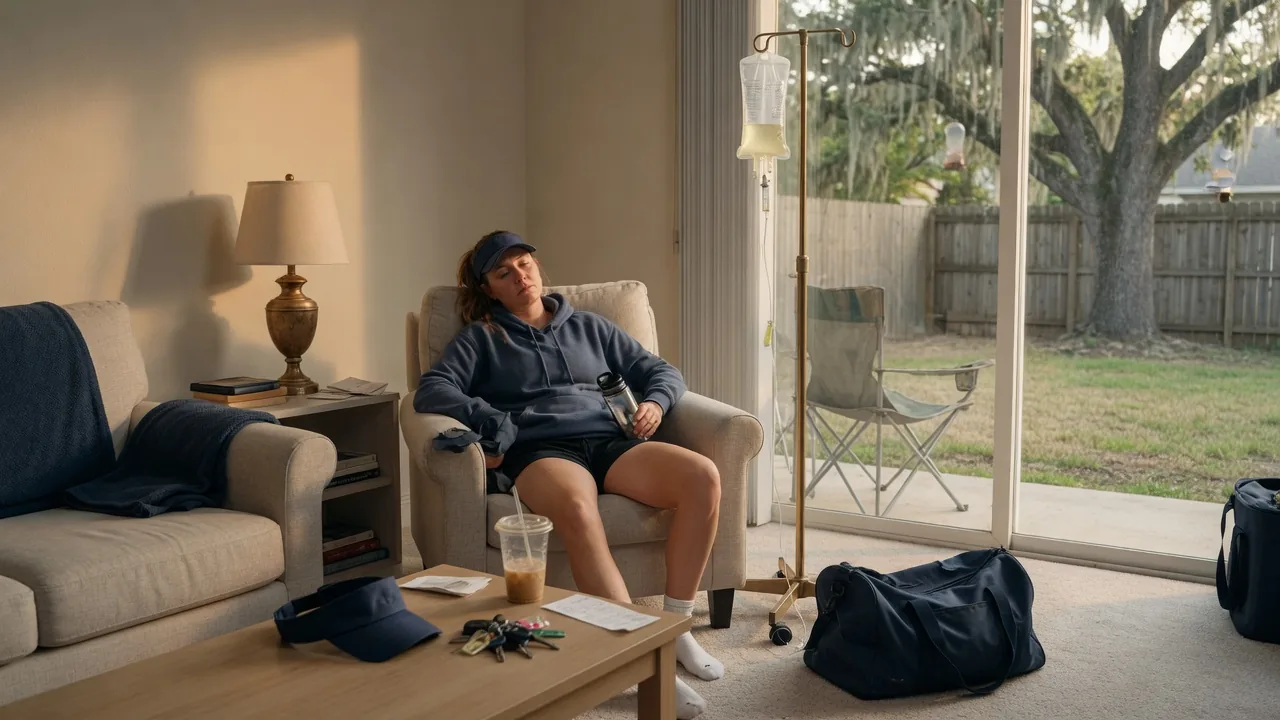
An IV is supporting cast, not the whole recovery story
Training adaptation still depends on the unglamorous fundamentals: fluids, food, sleep, appropriate load, and time. Game Day Drip does not repair an injury, replace a meal, or turn an exhausted athlete into a safe starter for the next match. It is a mobile hydration and wellness option that can sit beside the rest of a sensible recovery plan.
That framing matters because athletes are good at tolerating discomfort and bad at admitting when a problem needs evaluation. Sharp pain, a suspected concussion, severe heat illness, chest symptoms, confusion, or an inability to keep fluids down does not belong on a wellness booking form. Choose the right level of care first.
A Saturday tournament in Houston
The schedule says three games. The weather says 94 degrees. The parking lot reflects heat back through your shoes, and the final match runs late. By the time the team gets home, nobody wants another drive. A mobile visit can happen where the athlete is already cooling down, eating, and resting.
For one client, that may be a living-room appointment. For a gym or team, it may be a planned on-site setup with a private area, enough time, and a clear roster. Every participant still needs individual intake, consent, and a clinical decision. A group booking organizes logistics. It does not turn individual services into one blanket approval.
Game Day versus Essential Hydration
Essential Hydration starts at $169 and is the straightforward fluids-and-electrolytes option. Game Day starts at $219 and is the recovery-focused menu choice. If the goal is simply hydration after activity, the simpler drip may be enough. If the athlete specifically wants the Game Day formulation after reviewing it with the nurse, then compare its Standard and Premium tiers.
Ask what is in the current blend and what changes at the Premium level. Do not judge the choice by the size of the price or the intensity of the workout. More ingredients are not a medal. The useful service is the one that fits the stated goal and the clinical review.
Planning a gym or team recovery visit
Start with the date, location, number of interested adults, available space, and the time window. Ask about staffing and group pricing rather than multiplying a menu price and calling it a quote. Build in privacy for intake and enough seating for the planned services. If the facility has access rules, loading instructions, or insurance requirements, raise those details early.
The best event flow feels calm, not like a production line. Athletes should have room to ask questions and decline. Coaches, employers, and teammates do not need access to private health details. A smooth group visit protects both the schedule and the person sitting in the chair.